Last Updated: October 30, 2026
Quick Summary
Homes with acreage can be worth it in Northeast Tennessee if you confirm zoning, utility access, septic and well conditions, and Greenbelt tax exposure before making an offer. The real cost often lies in infrastructure, not the asking price.
- Confirm the lot size with a recent land survey before comparing prices.
- Check county zoning first, since it determines whether you can build, keep livestock, or subdivide.
- Ask utilities for written service availability or extension estimates, since electric, water, and internet may stop at the road.
- Request septic permit history and well records, and test the water during your due-diligence period.
- Ask the county assessor whether the parcel is in Greenbelt, because rollback taxes can apply if use changes.
Table of Contents
- What Counts as a Home With Acreage in Northeast Tennessee
- Rural Real Estate Market Trends in Northeast Tennessee
- Zoning Laws for Rural Property You Need to Check First
- Utilities, Septic, and Well Water on Larger Lots
- Property Taxes and Greenbelt Considerations for Acreage
- Buying Land in Tennessee Checklist for Acreage Properties
- Scheduling a Consultation Before You Make an Offer
- Frequently Asked Questions
What Counts as a Home With Acreage in Northeast Tennessee
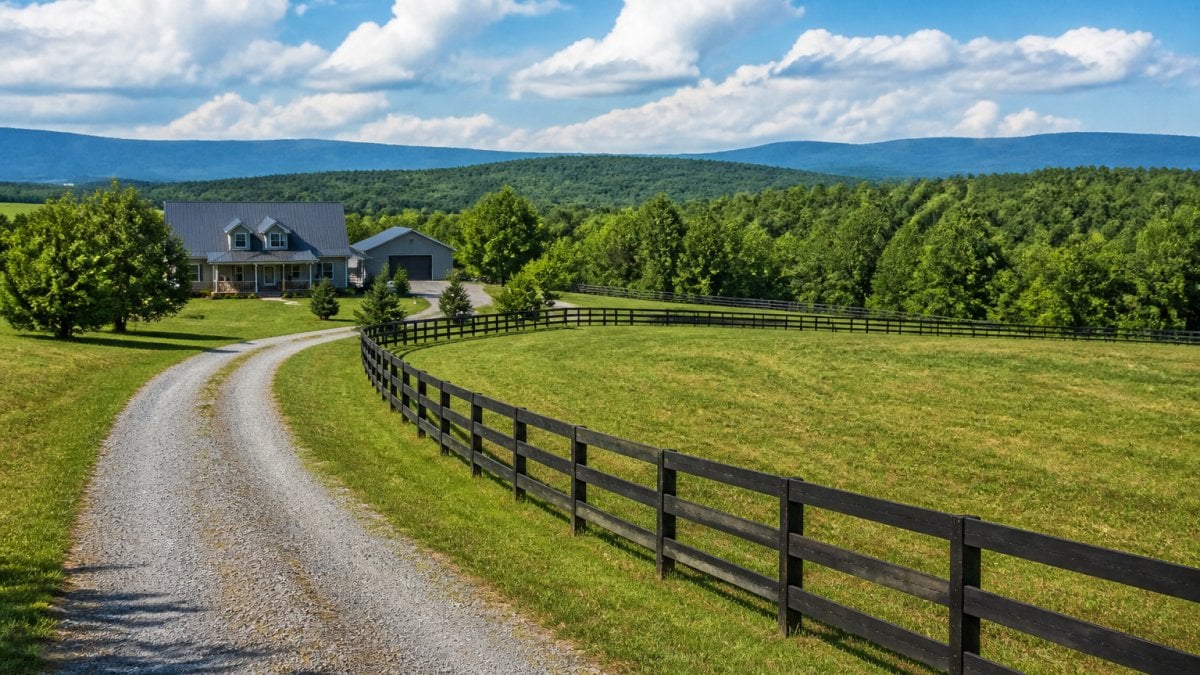
Homes with acreage are properties that sit on more land than a typical residential lot, usually one to several acres, often with room for a garden, pasture, or outbuildings. For guidance on narrowing your search, read how to choose the right home in Piney Flats.
A wooded five-acre parcel and a cleared five-acre parcel with a barn can carry very different costs, restrictions, and daily realities. Many buyers start by asking whether they want a homestead, a mini-farm, a private retreat with mountain views, or simply more space between neighbors.
Acreage listings also vary in usable land. Topography matters. A steep, heavily wooded lot may look generous on paper but offer little buildable ground. Riverfront and bottomland can flood.
Rural Real Estate Market Trends in Northeast Tennessee
Rural real estate moves on its own rhythm. Readers curious about the lifestyle can explore life near Boone Lake in Piney Flats.
Market trends are worth tracking at the parcel level as well as the county level.
Sellers should understand the same dynamics in reverse. Acreage with clear boundaries, utility access, and documented surveys often sells faster and with fewer surprises at closing.
Zoning Laws for Rural Property You Need to Check First
Zoning is the first hard-stop check for most acreage purchases. A county zoning designation determines whether you can build a home, place a mobile home, run livestock, operate a home business, or subdivide later.
Before making an offer, ask the county planning or zoning office for the parcel's current designation and any recorded easements or restrictive covenants.
Watch out: a property described as "unrestricted" may still fall under county building codes or septic permit requirements. Confirm those before assuming full freedom to build.
Utilities, Septic, and Well Water on Larger Lots
Utility access is the single biggest cost difference between a suburban lot and an acreage parcel, and it is where most first-time rural buyers get surprised. On a city lot, water, sewer, electric, and internet are already at the curb. On a 10-acre tract outside Kingsport or Johnson City, some or all of those may stop at the county road, or not exist at all.
Electric, Water, and Internet at the Road
Start with a drive-by and a phone call. Ask the utility providers whether service already reaches the parcel's frontage:
- Electric: Overhead lines along the road usually mean a service drop is straightforward. If the nearest line is a quarter mile away, the utility will quote a line-extension charge based on distance, pole count, and terrain. Ask for that quote in writing before you make an offer.
- Municipal water: Confirm whether a public water line runs along the frontage and whether the utility will allow a tap. If it does not, you are looking at a private well (see below) or a shared community water system, which comes with its own easements and fees.
- High-speed internet: This is the most common disappointment on rural acreage. Cable and fiber often stop at the subdivision boundary. Check the FCC National Broadband Map for the specific address, then call the provider, the map is a starting point, not a guarantee. Satellite and fixed wireless are usually the fallback, and both have latency and data-cap trade-offs if you work from home.
Septic Systems: Permits, Soil, and Inspection
Most rural parcels are not on public sewer, so a septic system is part of the purchase. Septic permits are issued through the county health department, and system design depends on soil conditions. Ask the health department what evaluation is required for the specific lot.
If the parcel already has a home and a system, request:
- The original septic permit and any as-built drawing
- Records of pumping and repairs from the last several years
- A professional inspection, including a tank pump-out and a check of the drain field
A failed drain field is one of the most expensive surprises in a rural purchase, and it is rarely covered by a standard home warranty.
Wells: Flow, Quality, and Testing
A private well supplies the home, so its performance is part of the property's value. Ask for the well driller's log (depth, casing, yield in gallons per minute) and recent water-quality lab results. Test for bacteria, nitrates, and, in some areas, arsenic and radon. A low-yield well may need a storage tank or a second well, and treatment systems for hardness, iron, or sulfur add ongoing cost.
Driveways, Easements, and Road Maintenance
Access is its own infrastructure item. Confirm whether the road frontage is a public county road or a private easement, and who maintains it. A long gravel drive needs grading and gravel every few years; a shared private road usually has a maintenance agreement that runs with the deed. Ask for it in writing. Utility easements across the parcel are common and generally fine, but they limit where you can build, plant, or fence.
A Practical Order of Operations
- Pull the address and parcel number from the listing.
- Call electric, water, and internet providers for written availability and extension estimates.
- Pull the septic permit history from the county health department.
- Request well records and order an independent water test.
- Confirm road access and any shared-maintenance agreement.
- Total the infrastructure costs and compare them against the asking price before you negotiate.
A parcel that looks like a bargain on price per acre can become an expensive project once utility extension, a new septic system, and a well are added in. Pricing those items early is the difference between a dream property and a money pit.
Property Taxes and Greenbelt Considerations for Acreage
Acreage changes your property tax picture in two directions: the annual bill can be lower than a suburban lot's, and the exit cost can be much higher if the land leaves a preferential program. Tennessee's Greenbelt program is the mechanism most buyers have never heard of until it shows up on a closing statement.
How Tennessee's Greenbelt Program Works
Tennessee's Greenbelt program can allow qualifying land to be assessed at its use value for farming, forestry, or open space rather than its market value (Greenbelt).
Eligibility is set by the county assessor, which will confirm the acreage, use, and application requirements for a given parcel.
The program is administered county by county, so the specific thresholds and forms vary.
Rollback Taxes: The Exit Cost Buyers Miss
When land leaves Greenbelt because it is sold for development, subdivided, or converted to a non-qualifying use, the county may assess rollback taxes. Ask the county assessor how any rollback would be calculated for a specific parcel.
Questions to Ask the County Assessor
Call the assessor's office with the parcel number and ask:
- Is this parcel currently enrolled in Greenbelt, and under which category (agricultural, forest, open space)?
- What is the current annual tax bill, and how much of it reflects the Greenbelt reduction?
- If the use changes after closing, what rollback tax would apply, and over how many years is it calculated?
- What is the application deadline and process if I want to enroll a parcel that is not currently in the program?
- Are there any pending reappraisals or county reassessments that would change the bill?
Get the answers in writing where possible. A title company or real estate attorney can also confirm whether any rollback liability is recorded against the parcel.
Beyond Greenbelt: Other Tax and Closing Costs
Greenbelt is the headline, but acreage purchases carry other costs worth pricing early:
- Recording fees and transfer taxes based on the purchase price
- Survey costs, which are higher on large or irregular parcels
- Title search and title insurance, which can take longer on rural tracts with older deeds and easements
Ask your agent or title company for a written estimate of closing costs specific to the parcel, not a generic percentage.
Why This Matters for Resale
A buyer who understands Greenbelt and rollback exposure negotiates from a stronger position, and a seller who discloses enrollment clearly avoids surprises at closing. If you plan to subdivide, build additional homes, or convert pasture to another use, model the rollback cost into your budget before you make an offer, it is one of the few rural-land costs that is both large and easy to overlook.
Buying Land in Tennessee Checklist for Acreage Properties
Use this checklist before making an offer on a home with acreage:

- Confirm the lot size with a recent land survey and check for boundary markers
- Get the county zoning designation and any recorded restrictions
- Verify road access, including whether it is public, private, or shared
This list will not replace professional advice, but it helps you ask better questions early in the process.
| Checklist Item | Why It Matters | Who to Contact |
|---|---|---|
| Land survey | Confirms usable acreage and boundaries | Licensed surveyor |
| Zoning designation | Determines allowed uses and building rights | County planning office |
| Septic and well records | Affects livability and repair costs | County health department, inspector |
| Greenbelt status | Changes annual tax exposure | County assessor |
Scheduling a Consultation Before You Make an Offer
Acreage purchases involve more moving parts than a standard home sale, from zoning and utilities to tax programs and probate timing. A consultation gives you a chance to talk through your goals, budget, and concerns before you commit.
Kristi Bailey works with homeowners, first-time buyers, seniors downsizing, and families handling estate or probate sales in Tennessee and Virginia. If you are weighing timing, see whether buying in the off season has advantages before you commit to an offer.
To discuss a specific property or your timeline, you can schedule a consultation with Kristi Bailey through the contact page on her website.
Frequently Asked Questions
What are the benefits of buying a home with acreage in Northeast Tennessee?
Acreage gives you privacy, room for gardens, pasture, or a small homestead, and often more space between you and neighbors than a typical subdivision lot. Many buyers also value the mountain views and outdoor recreation the region offers. The tradeoffs include more upkeep, possible well and septic systems instead of municipal service, and property tax and insurance costs that can differ from in-town homes. Weigh these against how you plan to use the land before deciding.
Is it expensive to maintain property with acreage in this region?
Costs depend on how much land you have and how you use it. Mowing, fence repair, tree removal, and driveway maintenance add up, and a larger lot may need equipment or hired help. Septic systems need periodic pumping and inspection, and well water may require testing. Price your annual maintenance before you buy, and ask your agent for comparable properties' typical upkeep so the budget reflects your actual acreage.
Are there zoning restrictions for homes with acreage in this area?
Yes. Zoning rules control what you can build, how close structures can sit to property lines, whether you can run livestock, and whether you can split the land. Check with the county planning or zoning office before you buy, since rules differ between counties and between incorporated and unincorporated areas. Also confirm easements, flood zone status, and any deed restrictions that could limit your plans.
What should I look for when inspecting land in Northeast Tennessee?
Walk the property in different seasons if possible, and check drainage, slope, and access roads. Confirm the boundaries with a recent land survey, look for easements and right-of-way access, and test or evaluate the soil for septic suitability. Ask about utility availability, since extending power or water lines to a remote parcel can be costly. A local agent can help you line up inspectors familiar with rural properties.